Plan Better
Compare cabin types, ship layouts, and onboard features before you commit
Most cruise disappointments trace back to a mismatch between expectations and the actual
onboard experience — not the destination itself. A ship that feels right for a family
travelling with young children looks completely different from one suited to a couple
who prioritise quiet sea days and fine dining. Before comparing prices, it is worth
building a clear picture of what daily life on a specific ship actually involves. This
section covers the practical details that affect your experience from embarkation
morning to the final port day: cabin categories, dining structures, onboard activity
levels, and how different ship sizes change the feel of the voyage.
Say hello
Ship Size and What It Changes
Imagine two ships sailing the same Southeast Asia route on the same week. One carries around 700 passengers; the other carries close to 4,000. The ports they visit might overlap, but the daily experience onboard is fundamentally different in ways that go beyond the obvious scale differences. Smaller ships — typically those carrying fewer than 1,000 passengers — tend to access ports that larger vessels cannot, including smaller island anchorages and river terminals. They also operate with a higher staff-to-passenger ratio, which usually translates to more attentive service in dining venues and on deck. The trade-off is a narrower range of onboard amenities: fewer restaurant choices, smaller entertainment venues, and less variety in daytime programming. For travellers who plan to spend most of their time ashore, this trade-off is rarely a problem. Large ships, by contrast, function more like floating resorts. Multiple pools, a broad range of dining options from casual buffets to ticketed specialty restaurants, full-scale theatres, and dedicated spaces for everything from rock climbing to cooking demonstrations. The sheer variety of onboard programming means sea days never feel empty. The downside is that popular venues and activities require advance booking, and embarkation and disembarkation processes take longer due to the volume of passengers moving through the same spaces. Mid-size ships — roughly 1,000 to 2,500 passengers — sit between these two profiles and represent the most common format on regional Asian itineraries. They carry enough passengers to support a varied dining and entertainment programme while remaining manageable in terms of crowd levels and port access. If you are cruising from Malaysia for the first time, a mid-size ship on a regional itinerary is usually the most practical starting point for calibrating your preferences before committing to a longer or larger voyage.
Dining Structures
Understand what is included and what costs extra before you step onboard
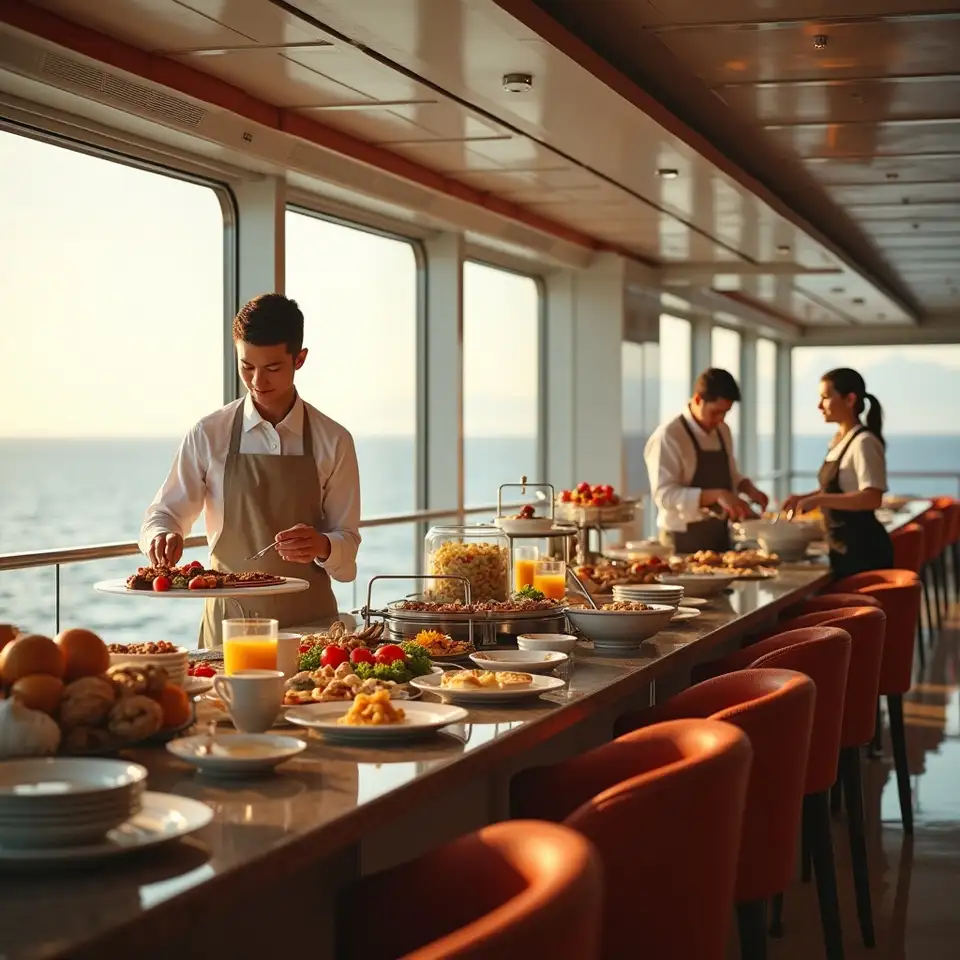
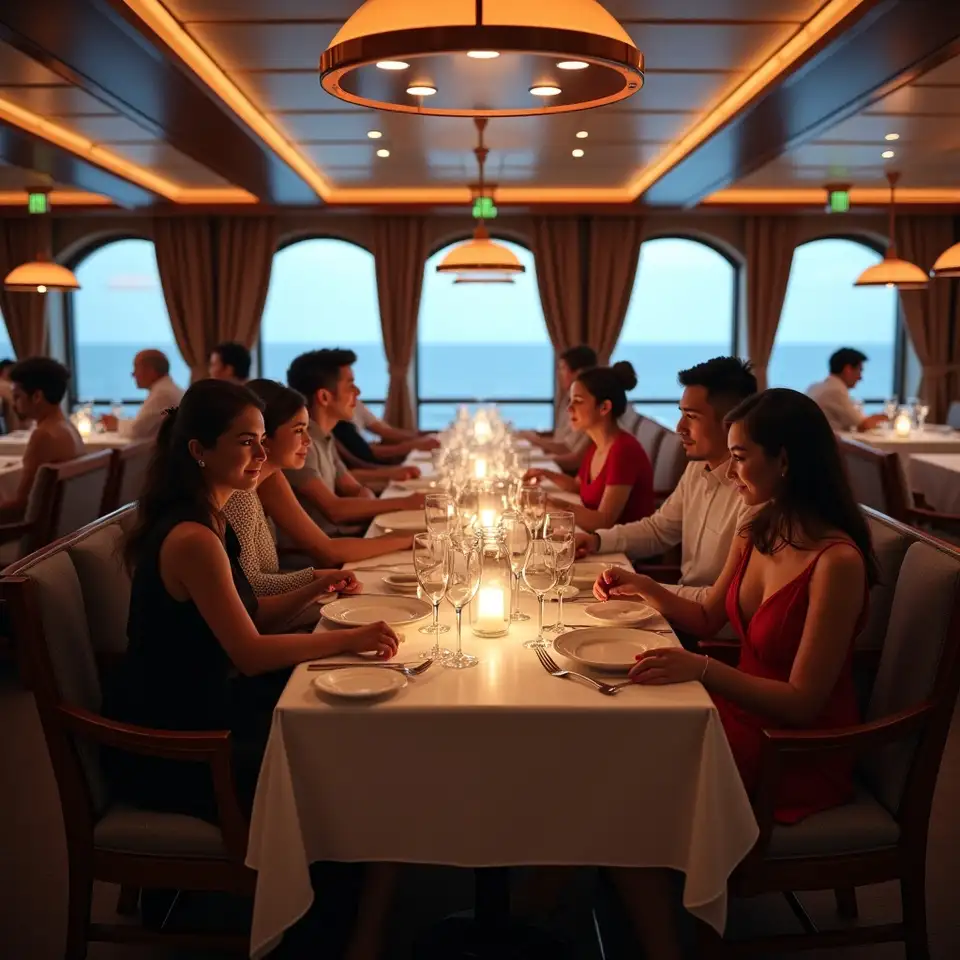
Most modern cruise ships separate dining into two tiers: included venues and specialty
restaurants. The included tier covers the main dining room — which typically operates
two sittings or an open-seating format — and a buffet venue open for most of the day.
Specialty restaurants carry a cover charge or per-dish pricing and require advance
reservation. Knowing this structure before you board helps you decide whether a dining
package purchased pre-departure represents a genuine saving against your actual eating
habits during the voyage.
Learn more
Cabin Categories Explained
Cabin selection is one of the most consequential decisions in the booking process, and
it is also one of the areas where the gap between the promotional description and the
practical reality tends to be widest. Interior cabins have no window or porthole and are
the most affordable category on any ship. For travellers who spend most of their time at
ports or in public areas, an interior cabin is a practical choice — you are essentially
booking a comfortable place to sleep and store your belongings. The absence of natural
light does affect some travellers' sense of time, particularly on sea days, so it is
worth considering honestly how much time you plan to spend in the cabin before ruling
out the upgrade. Oceanview cabins provide a fixed window but no outdoor access. They
allow natural light into the cabin and give you a visual sense of the sea and weather
without the premium attached to a balcony. For voyages through particularly scenic
stretches of water — the Norwegian fjords, the Japanese coastline, the island passages
of Indonesia — an oceanview cabin captures more of the experience than an interior
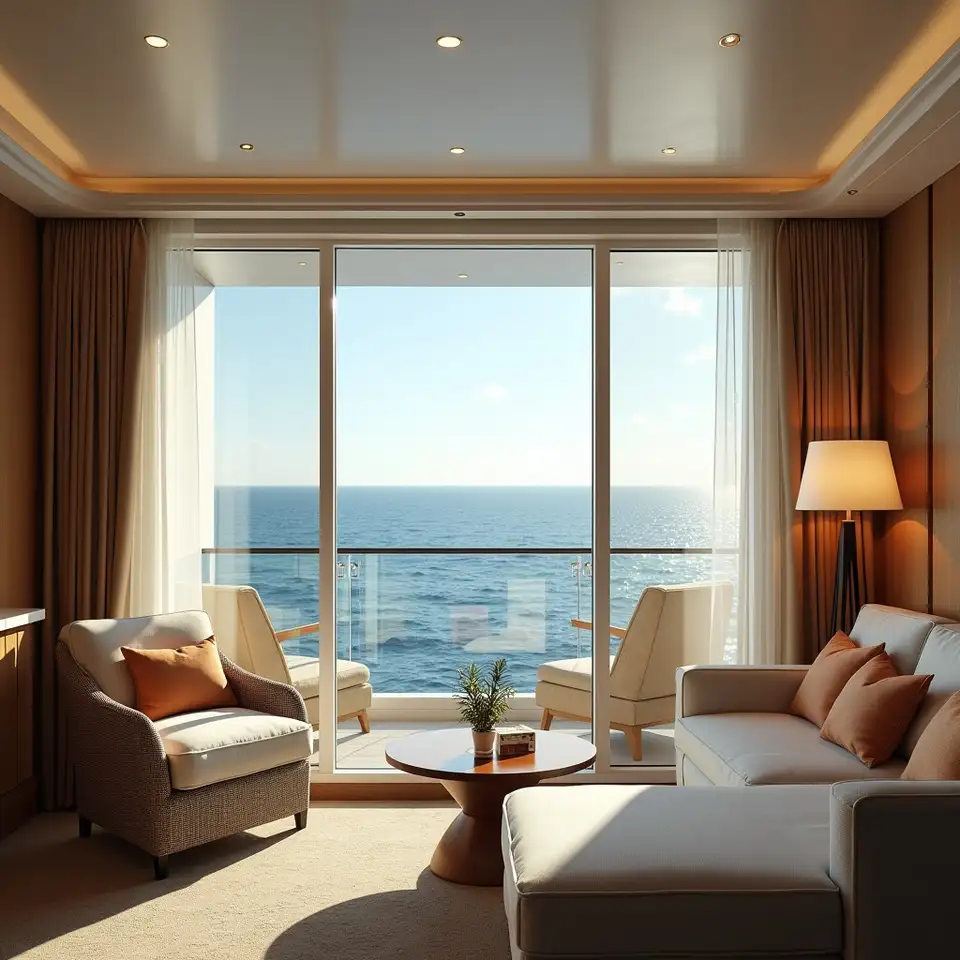
without the full cost of a private outdoor space. Balcony cabins add a small private
outdoor terrace with seating. On itineraries with significant sea-day content, this
becomes a genuinely useful space rather than a luxury. The ability to step outside in
the morning, watch a coastline approach, or sit with a drink in the evening without
competing for a public deck chair changes the texture of a sea-heavy voyage
considerably. Mid-ship balcony cabins on middle decks tend to offer the best combination
of stability, noise level, and proximity to key facilities. Suites and high-category
cabins add meaningful perks beyond space: priority embarkation, dedicated concierge
service, access to exclusive dining venues, and on some ships, a separate suite-only
pool deck. For travellers who value these inclusions, the price difference often
reflects genuine service upgrades rather than just a larger room. For those who plan to
spend most of their time ashore or in shared spaces, the upgrade is harder to justify on
a cost-per-use basis.
Four Onboard Features Worth Evaluating Before You Book
1
Pool and Deck Facilities Vary Significantly by Ship
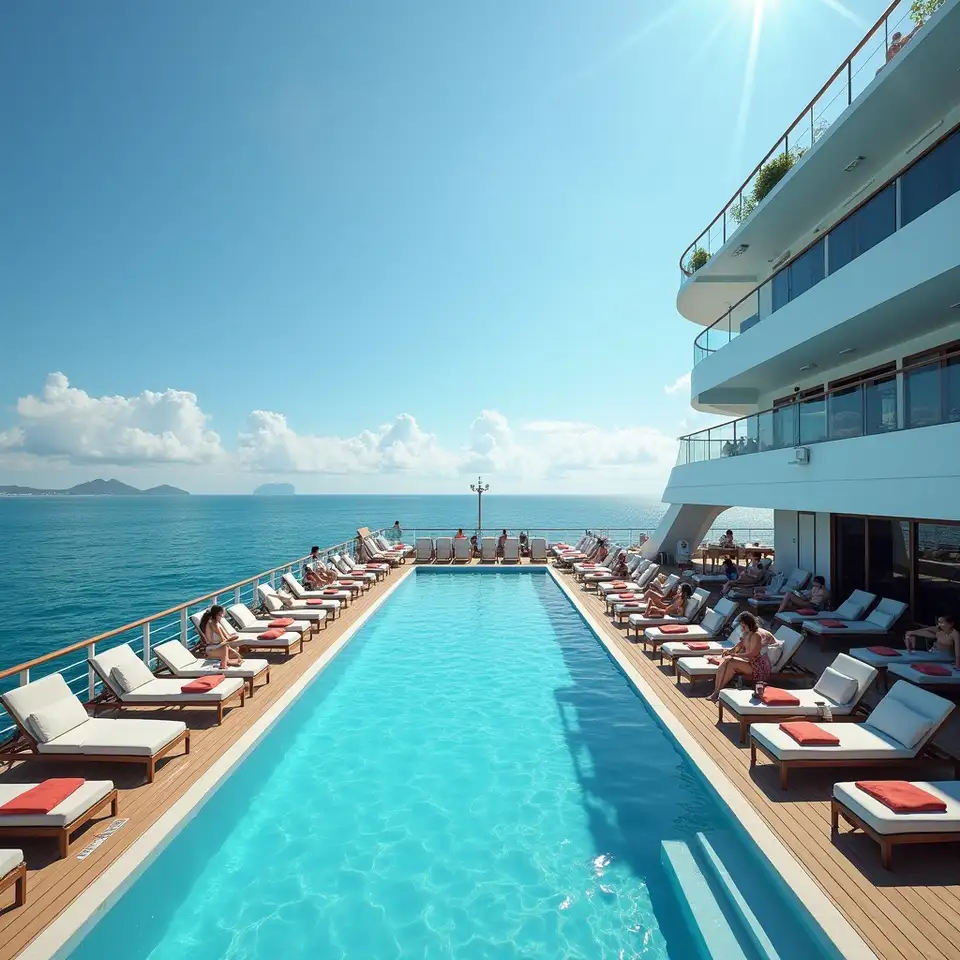
Some ships carry multiple pools across different deck levels, including adults-only areas and covered pool zones for sea days with variable weather. Others offer a single main pool that becomes crowded on sea days when most passengers are onboard simultaneously. Checking the deck plan for pool locations and capacity gives you a realistic sense of what to expect during high-use periods.
3
Spa and Wellness Facilities Differ in Scope
Most cruise ships carry a spa and fitness centre, but the range of facilities varies considerably between vessels. Some include thermal suites with saunas, steam rooms, and hydrotherapy pools as part of the spa complex, accessible for a daily or voyage-length fee. Others offer a basic gym and treatment rooms without the broader wellness infrastructure. If spa access is a priority, verifying what is included versus charged separately before booking saves a noticeable surprise onboard.
How to Compare Cruise Ships Practically
Comparing cruise ships from a brochure or booking platform rarely gives you the
information that actually affects day-to-day experience. Here is a more structured
approach that surfaces the details most travellers only discover once they are
onboard.
A Practical Framework for Evaluating Any Cruise Ship
- Start With the Passenger-to-Space Ratio: This figure — sometimes listed as the space ratio in ship specifications — divides the ship's gross tonnage by its passenger capacity. A higher number indicates more space per person, which generally translates to less crowding in public areas during sea days. It is a single number that summarises a lot of the daily comfort variables in one check.
- Map the Deck Plan Against Your Daily Habits: Before confirming a cabin, look at the ship's deck plan and locate your cabin relative to the venues you plan to use most. If you plan to use the main dining room for dinner each evening, a cabin six decks away from it adds up over a seven-night voyage. Proximity to elevators, the buffet, and pool areas affects how much you actually use the ship's facilities.
- Check the Age and Refurbishment History of the Ship: Older ships that have undergone recent dry-dock refurbishments often carry updated cabin interiors and public areas that match newer vessels. Ships that have not been refurbished in several years may show wear in cabins and shared facilities that affects the overall experience. Most cruise lines publish refurbishment dates, and travel review sites document the difference between pre- and post-refit conditions in detail.
- Read Recent Passenger Reviews Filtered by Voyage Type: A ship's overall rating on review platforms mixes feedback from very different voyage types — transatlantic crossings, Caribbean loops, and short regional hops attract different traveller profiles and produce different reviews. Filtering reviews by itinerary type closest to yours gives you a more relevant picture of what to expect from the specific experience you are booking, rather than a blended average across all sailings.
- Verify Included Versus Charged Amenities in Writing: Cruise pricing structures vary widely between lines. Some include drinks packages, gratuities, and shore excursion credits in the base fare; others charge each of these separately. Building a comparison that captures the total cost — base fare plus the amenities you would actually use — gives you a more accurate picture of relative value than comparing headline prices alone.
- Look at the Itinerary's Port-to-Sea-Day Split: A seven-night itinerary might include anywhere from three to six port days depending on the route. More port days means more time ashore and less reliance on onboard facilities for entertainment. More sea days means the ship's programming, dining options, and cabin quality matter more to your overall satisfaction. Matching this split to your travel style is one of the most direct ways to predict whether a specific voyage suits you.
What This Section Covers
This section focuses on the practical variables that separate a well-matched cruise booking from one that produces avoidable friction — ship size, cabin categories, dining structures, onboard amenities, and how to compare options in a way that reflects your actual travel preferences.
Why the Details Matter More Than the Headline Price
Two cruises priced similarly can deliver very different experiences depending on ship age, included amenities, cabin location, and onboard programming. Working through these variables before you book puts you in a position to choose based on fit rather than price alone.
Onboard Life in Practice
What different parts of the ship look like during a typical voyage